Priority 1: Know who grows it
Our approach to ethical trade starts with knowing where our cacao comes from. And while that sounds really basic - and it is - the majority of chocolate is made by companies who cannot trace their cacao to the farmers who grow it.
If we want to make sure people within our supply chain are treated fairly, we need to know exactly who they are. So for every bag that we buy, we request farmer-level ledgers showing which farmers contributed to the bag and how much they were paid for their wet, freshly-harvest cacao - known as the farmgate price.
We also visit farmers and fermenters, learn from them, and ask questions so that we understand their business and how we can be a good partner.
---
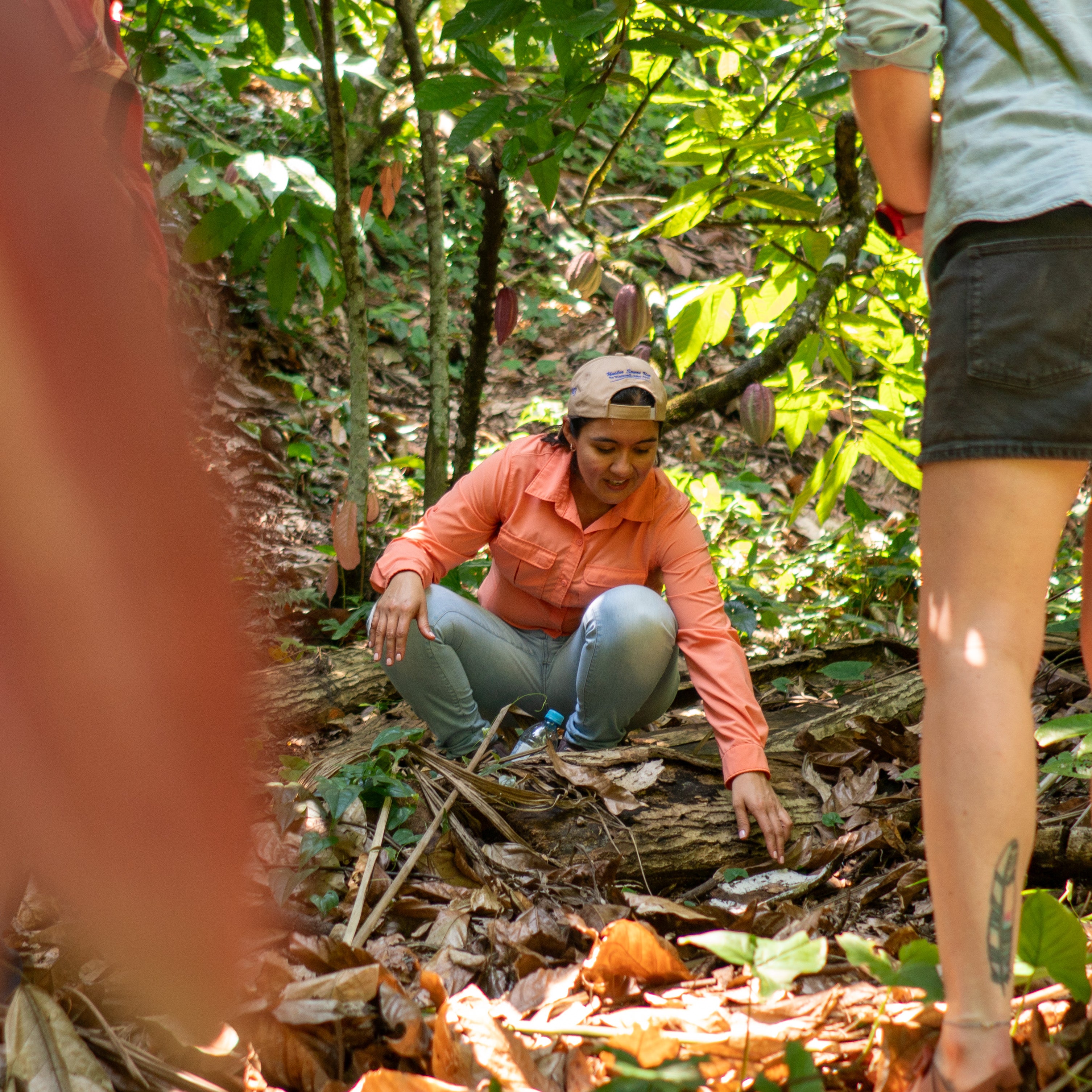
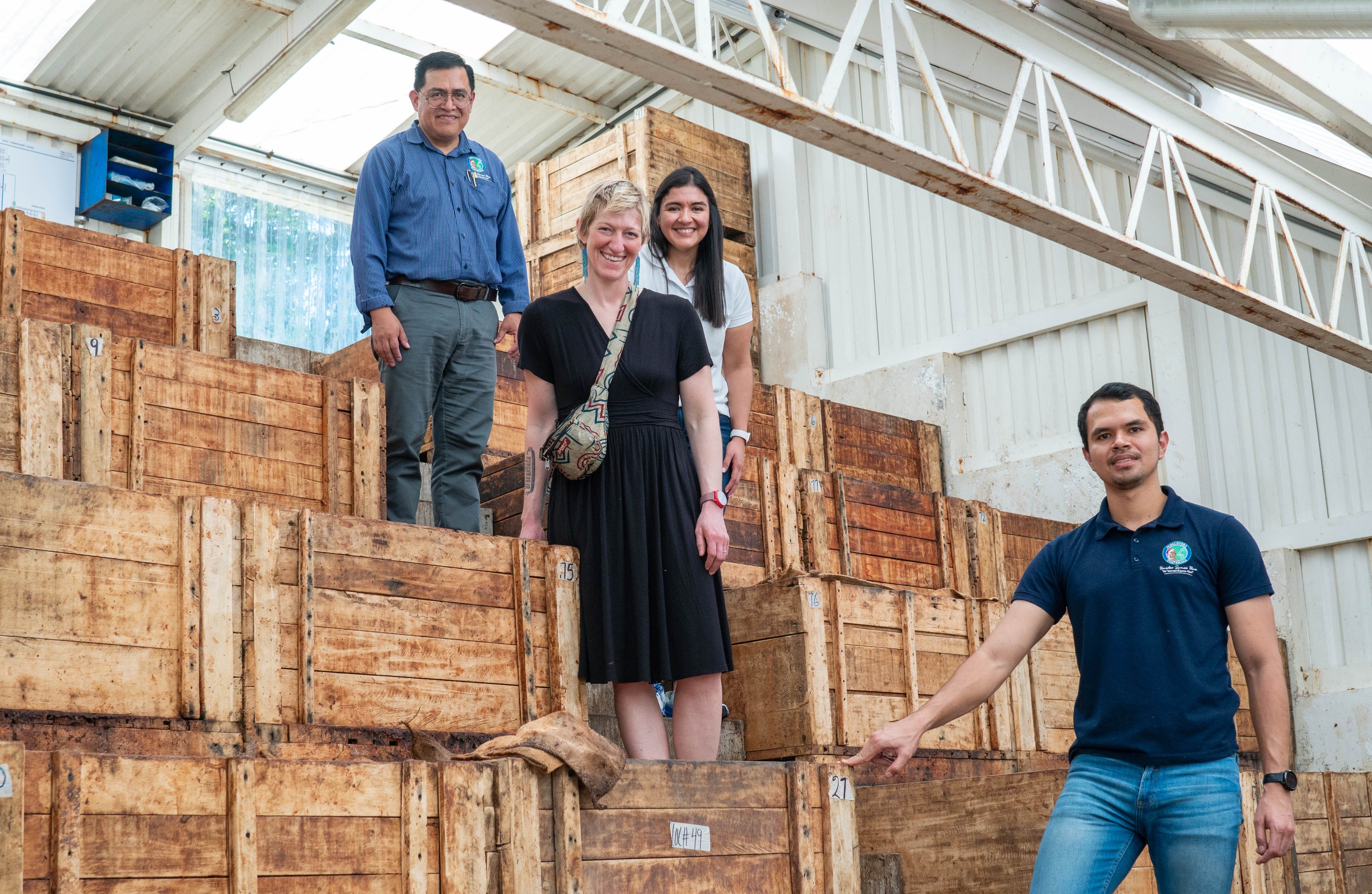
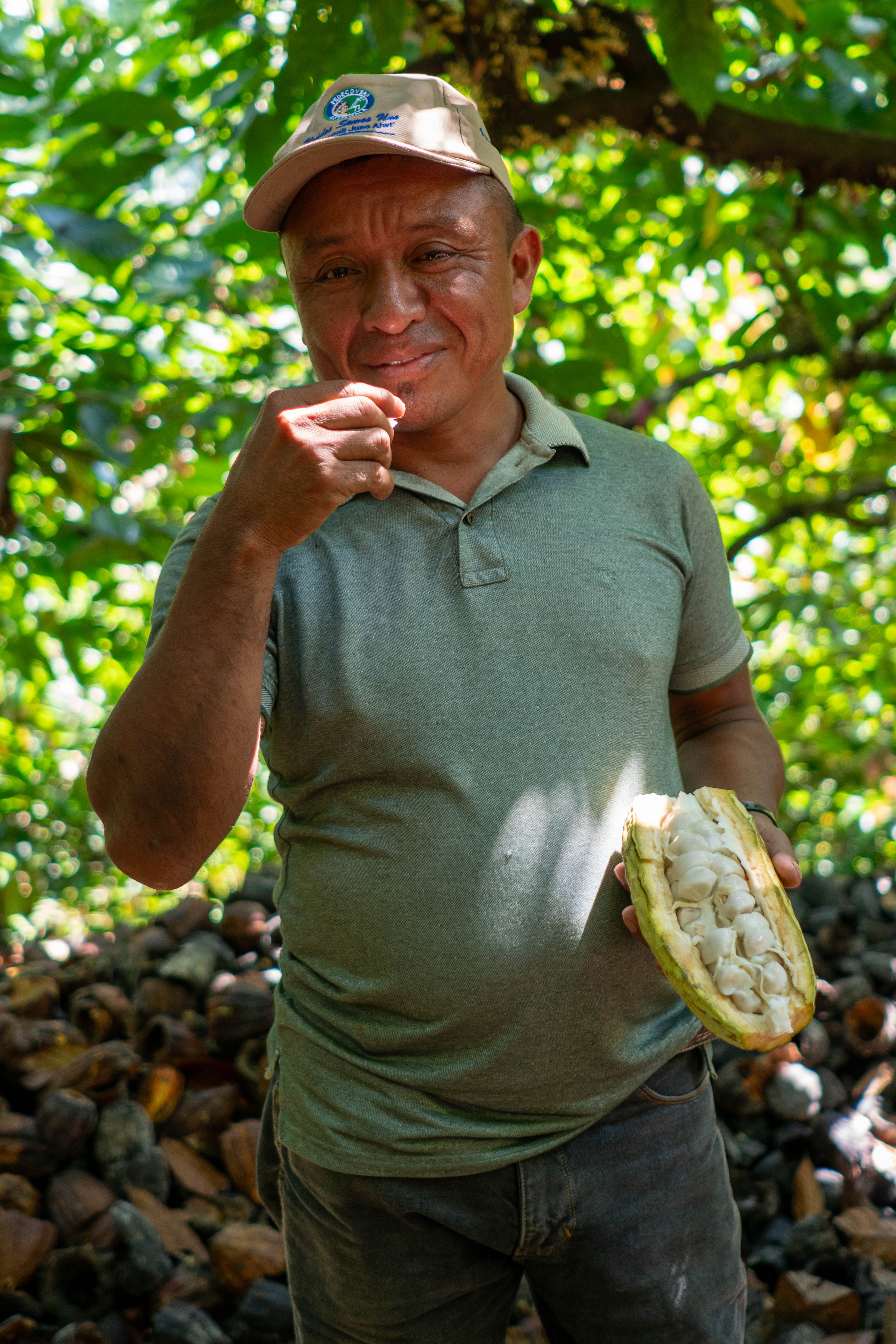
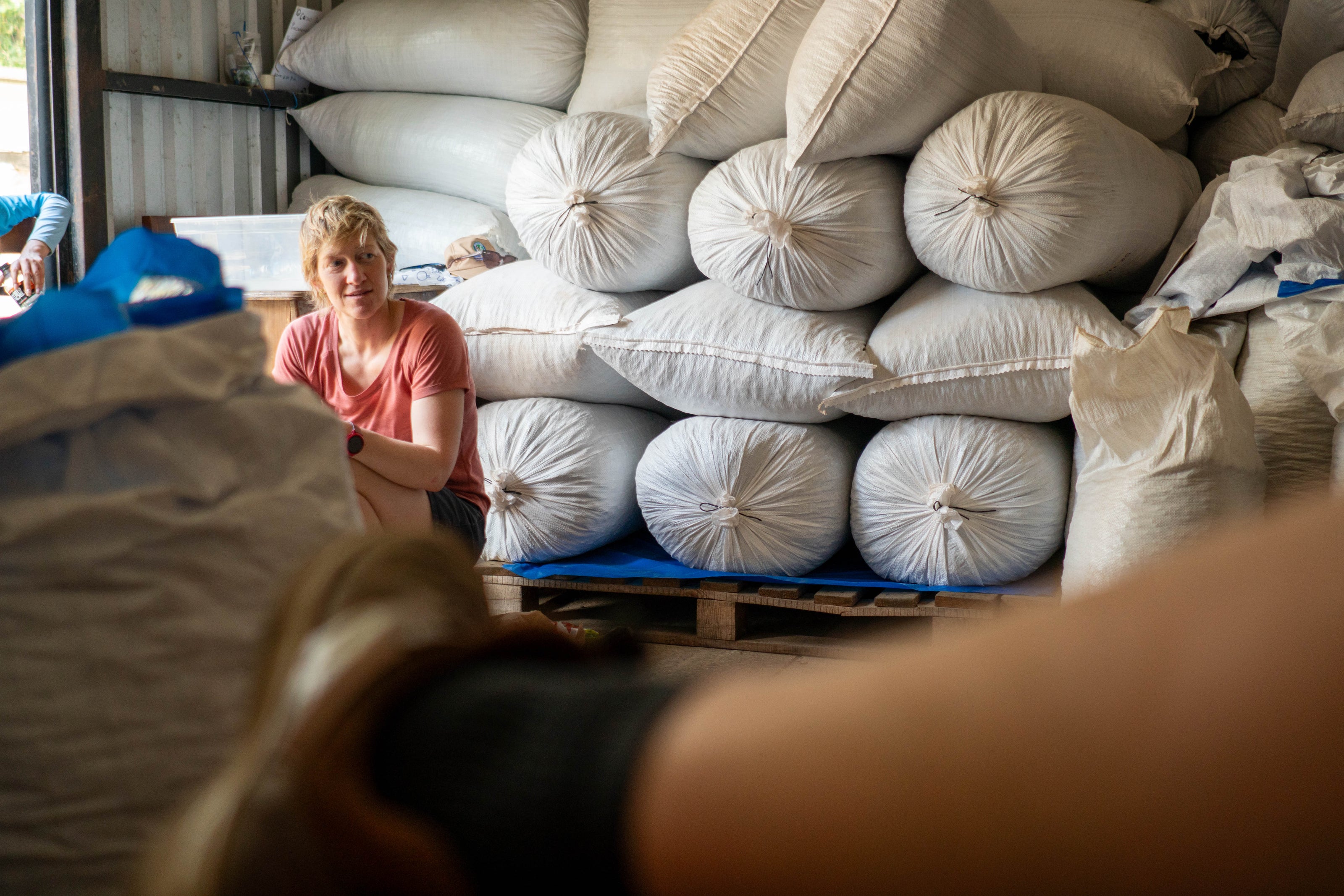
Pictured below: Gabriela Delgado teaches us about the soil in Alta Verapaz, Guatemala ||| Lauren stands with the team at FEDECOVERA in Cobán, Guatemala ||| Mr. Agustín Pan enjoys fresh cacao from his farm in Alta Verapaz, Guatemala
Priority 2: Reduce middle-men between us and the farmer
We work to minimize the number of middle-men between us and the farmer, a strategy known as "direct trade."
Shorter supply chains mean there is more "juice" in the economic "orange" for the farmers and fermenters. And because of this, farmers who sell their cacao directly typically receive a price per kilogram that is 30% to 100% above than "fair trade" standards.
- Our shortest supply chain has zero intermediaries: when we need a fresh bag of cacao, we send a money wire to their bank account in Quito, Ecuador.
- Our "longest" supply chain includes 1 values-aligned importer who bought directly from the origin and then sold that cacao directly to us. Our import partners focus on direct trade for the reasons listed above, and they help us buy cacao as-directly-as-possible from origins that we are too small to buy directly from ourselves.
---
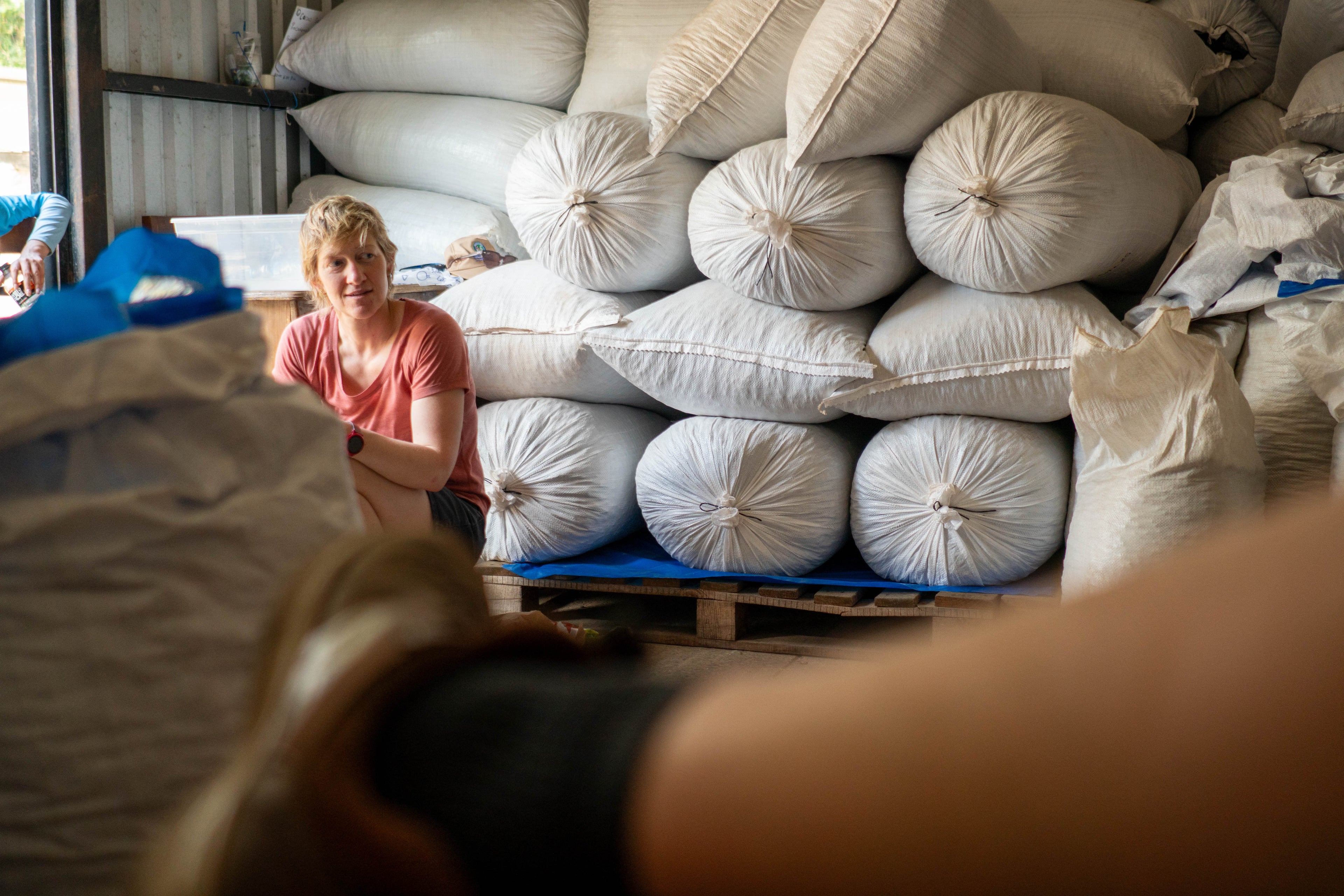
Pictured below: Lauren has lunch next to bags of dried cacao in Alta Verapaz, Guatemala ||| Wet cacao sits in a fermentation box during the final days of the process ||| Dry cacao sits in wooden drying racks, ready to be bagged up
Priority 3: Understand the economics
Logan spent five years working in Bozeman as an Agricultural Market Analyst. His job was to help corn and wheat farmers find the best location to sell their crop and protect the value of future harvests using the futures market.
Today, we use that experience to understand the economics of speciality cacao.
Fundamentally, we want to understand how much farmers are getting paid for their wet, freshly-harvested cacao and how that price compares to their local cacao market, Fair Trade standards, and the commodity cacao market. We work with cooperatives, farmers, and partners who expect better-than-fair-trade prices for premium cacao.
With this information, we can make an assessment of whether or not the price paid to a farmer are helping that farmer move toward their goals in life. For us, this simple definition gets to the heart of trade that is "fair" for the farmers involved.
---
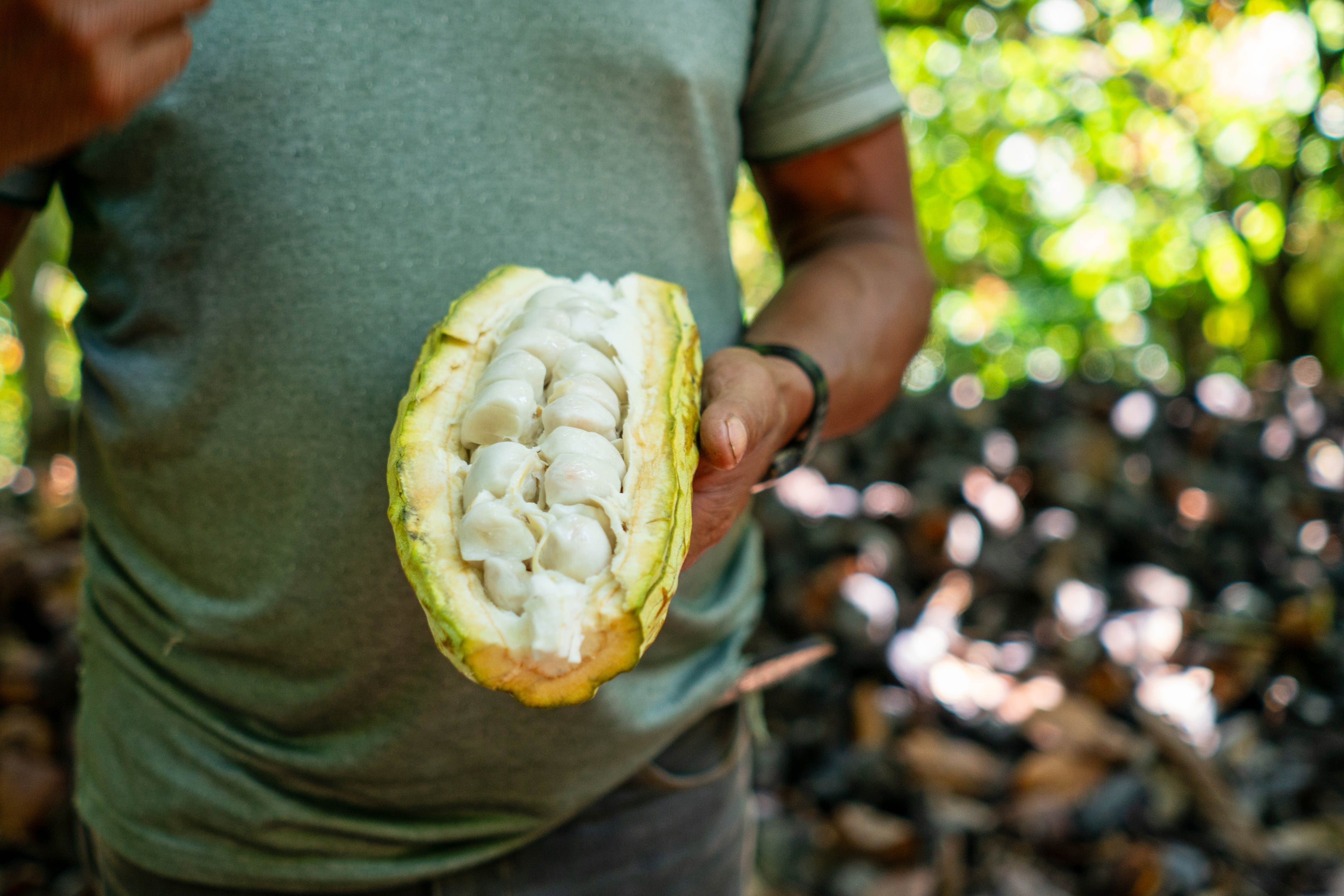
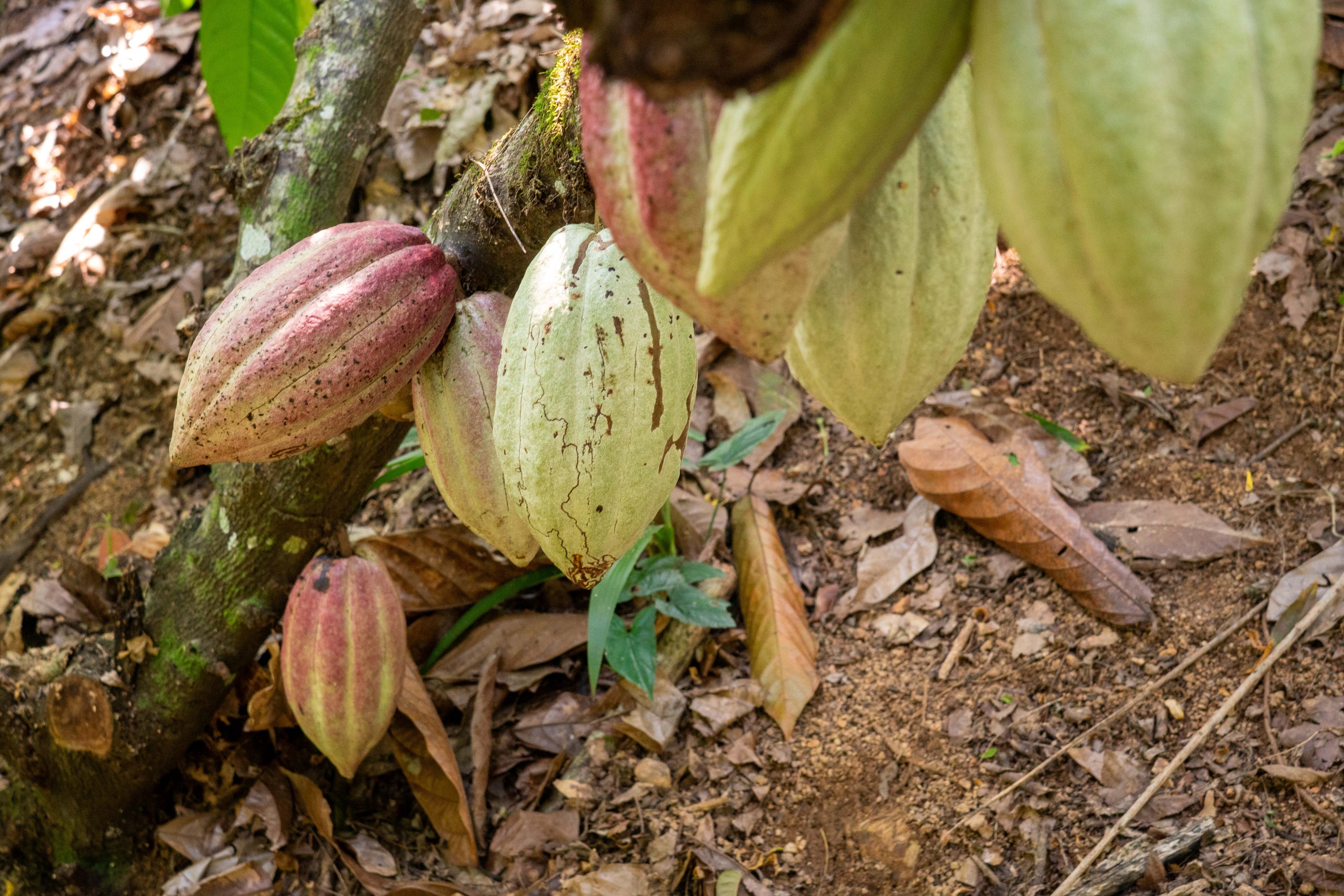
Pictured below: María Alejandra Riveiro holds a freshly-opened pod of cacao ||| Mr. Agustín Pan holds a freshly-opened pod ||| Multiple large pods grow on a cacao tree in Alta Verapaz, Guatemala
Priority 4: Buy from farmers practicing agroforestry
Farmers who practice agroforestry grow cacao alongside a mix of other trees and plants, creating a biodiverse, forest-like environment that supports soil health, shade, and ecological balance.
This is in contrast to monocrop farming— growing only cacao in large plots —which has been the preferred method of bad actors throughout history. Monocrop agriculture tends to drain the land, and once the soil is depleted or market conditions change, these companies leave, often abandoning damaged ecosystems.
Our worldview is this: Ethical trade depends on 1) the price a farmer is paid AND 2) the context of that price.
For example: Are farmers required to clear-cut their local food forest to make enough money to survive by mono-cropping cacao trees?
Most people would agree: this situation does not constitute "fair trade" even if the farmer is getting paid Fair Trade prices for their cacao.
Agroforestry offers farmers diverse landscapes and diverse income sources, and for that reason, cacao farmers have told us it is how they want to grow cacao.
---
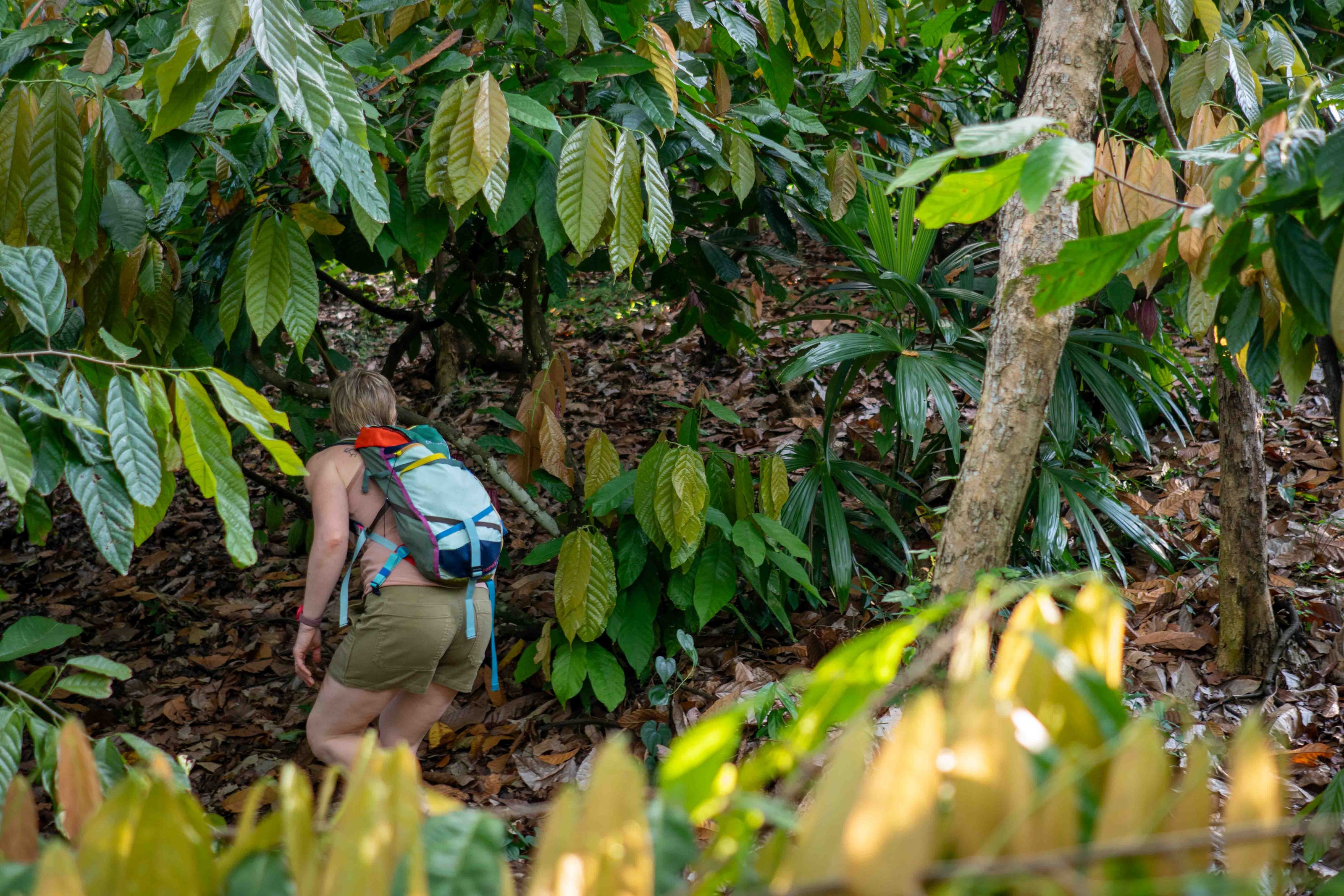
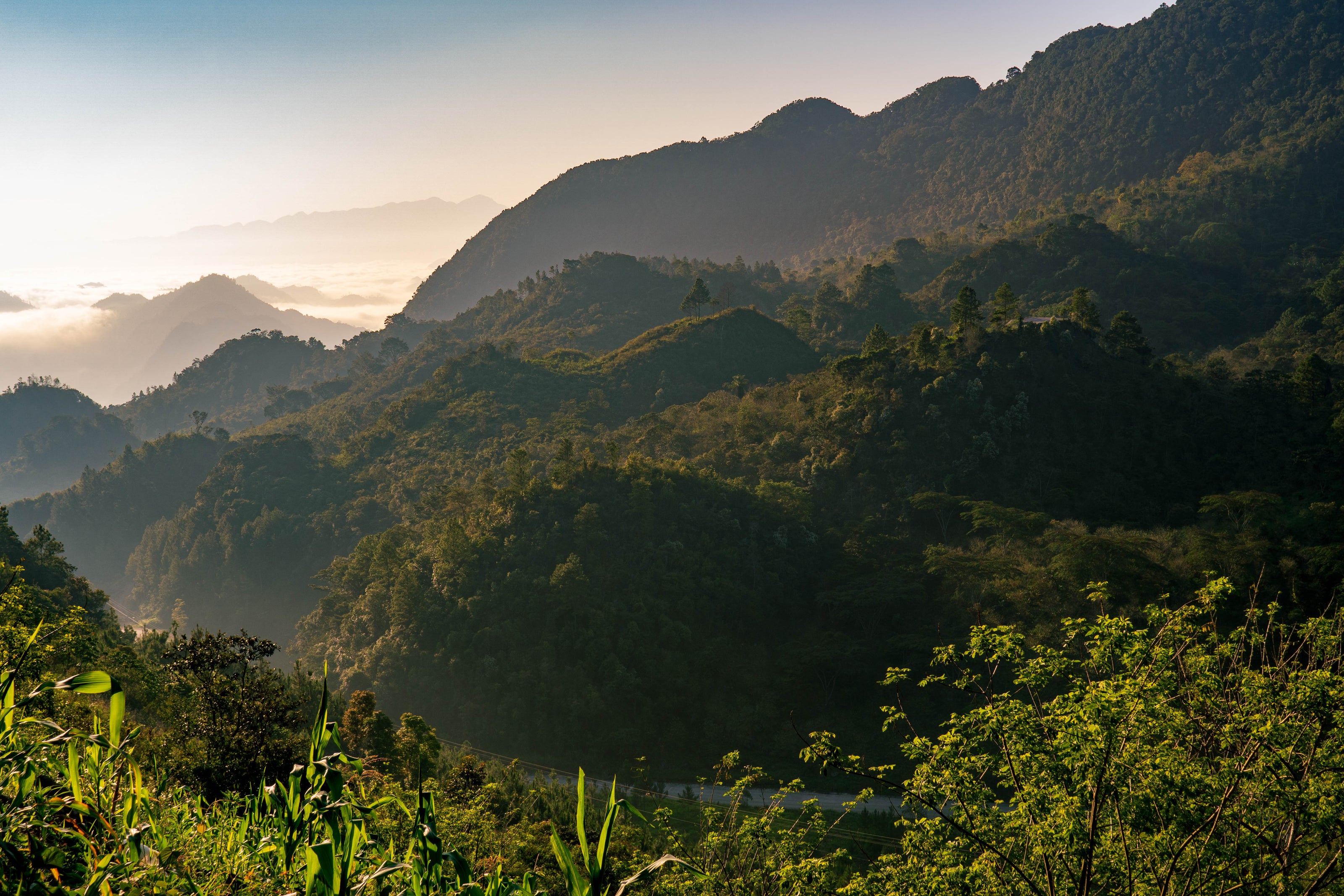
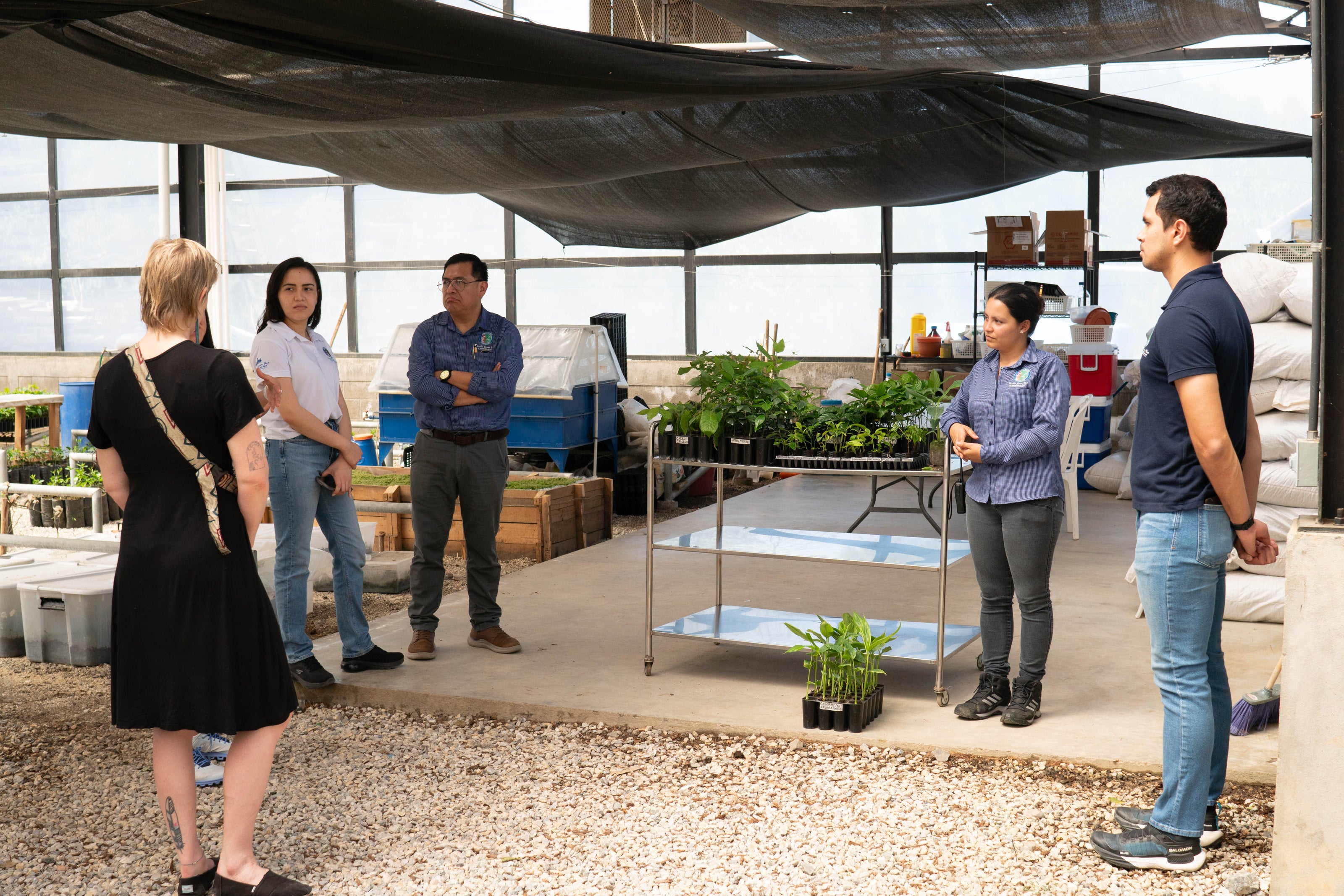
Pictured below: Lauren explores an agroforestry system in Izabel, Guatemala ||| Looking across the green forests near Cohoban, Guatemala ||| Lauren tours FEDECOVERA's cacao tree and hardwood nursery with their team